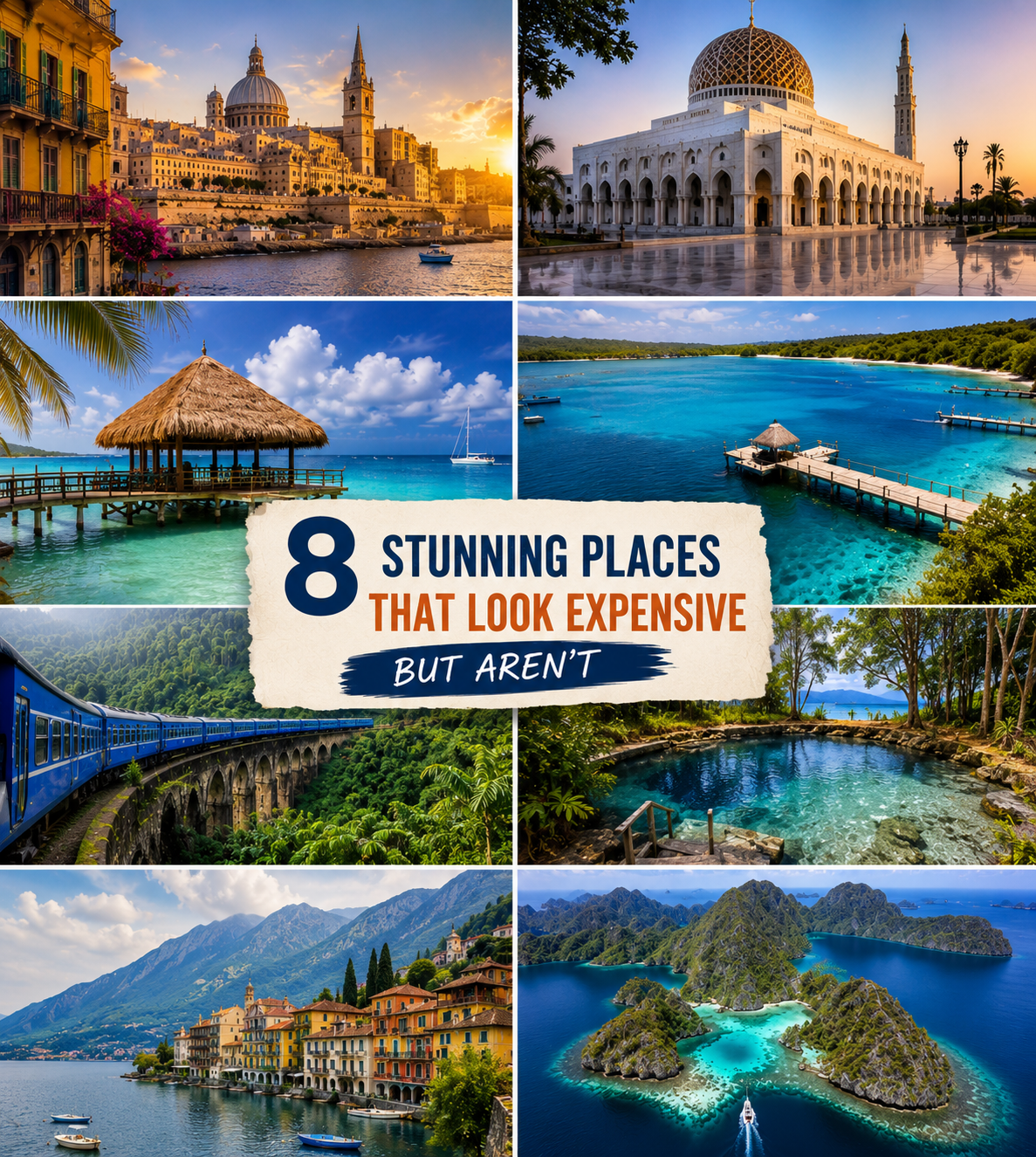
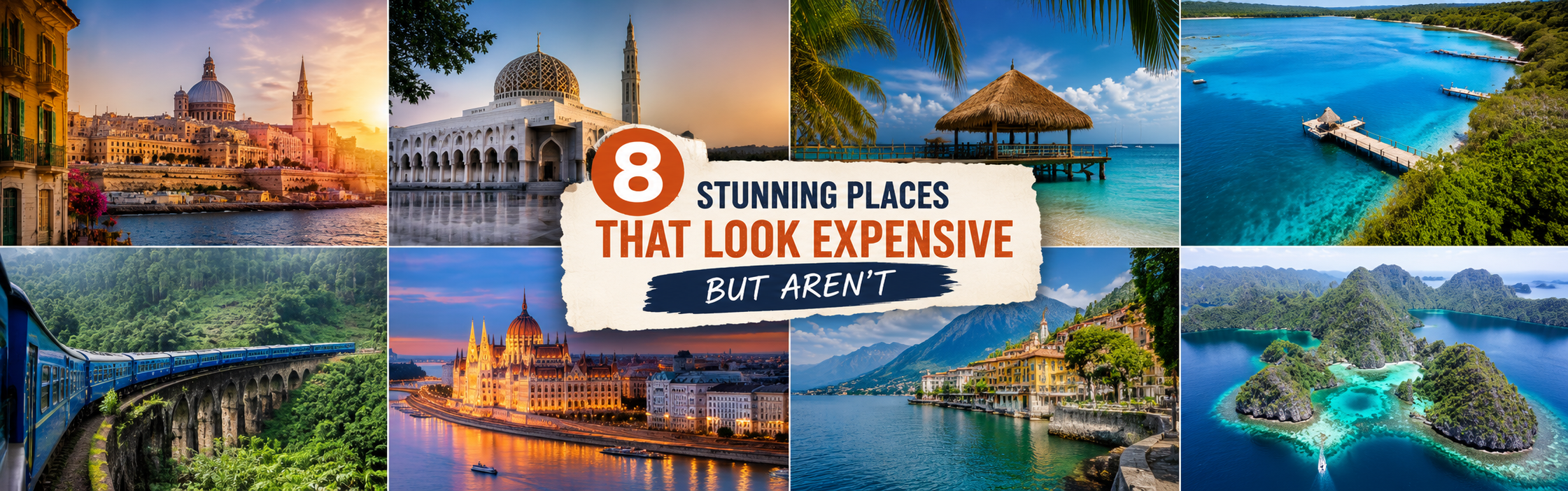
8 International Destinations That Feel Expensive (But Aren't)
Luxury has a branding problem—and travelers often pay for it.
For years, we've associated crystal-clear beaches, overwater villas, charming old towns, and dramatic mountain views with sky-high prices. Social media, celebrity vacations, and tourism campaigns have only reinforced that belief. But a destination's image isn't always a reflection of its actual cost.
Travel prices are influenced by factors like local living costs, exchange rates, airline competition, seasonality, and accommodation options—not just how luxurious a place looks. That's why destinations once considered exclusive, like the Maldives or parts of Greece, now offer budget-friendly ways to experience the same stunning scenery, while some less glamorous places can end up costing even more.
The biggest mistake travelers make is confusing reputation with reality. A destination's image can stay the same for decades, even as its prices change dramatically.
Below are eight real places where that gap runs the widest — with prices pulled from hotel-booking data and cost-of-travel research rather than guesswork, so you can actually plan around them instead of just hoping for the best.
| Destination | Best Months | Realistic Daily Budget (mid-range, per person) | The Honest Catch |
|---|---|---|---|
| Malta | May–June, September–October | ~$110–175 | Hotel rates and beach crowds surge in July–August. |
| Muscat, Oman | October–April | ~$120–220/day | Luxury beachfront resorts often start around $250–350/night, though dining and attractions remain reasonably priced. |
| Ambergris Caye, Belize | April–May, September–November | ~$180–300 | Flights, golf-cart rentals, and diving excursions can quickly increase your budget. |
| Bacalar, Mexico | November–April | ~$90–150 | Accommodation prices rise significantly during Christmas, Easter, and holiday weekends. |
| Sri Lanka | January–March (South & West) | ~$70–120 | Hiring a private driver adds convenience but increases daily costs; trains and buses are cheaper alternatives. |
| Budapest, Hungary | April–June, September–October | ~$80–150 | Central hotels have become pricier, especially during festivals and peak tourist months. |
| Lake Como, Italy | May–June, September | ~$90–160 (staying in Como, Lecco, or Menaggio) $260+/night (Bellagio hotels) | Bellagio commands premium prices; staying in nearby towns offers the same scenery for much less. |
| Raja Ampat, Indonesia | October–April | ~$80–150/day (homestay) / $300+ luxury | Getting there is the biggest expense—domestic flights, ferries, and marine park fees add substantially to the trip cost. |
Malta: The Mediterranean Glam Without the Ibiza Price Tag
Malta gives you turquoise Mediterranean water, honey-colored limestone towns, and boat-day culture, at prices well below Ibiza, Mykonos, or the Amalfi Coast. Mid-range hotels run about €80–150 a night, and a comfortable daily budget, food, transport, and one activity included, lands around €100–160 per person.
- Backpacker-level travel is possible on roughly €50–70 a day.
- A savory pastizzi snack costs under €1; a sit-down local meal runs €12–20.
- Costs are roughly 30–40% lower than Ibiza or Mykonos for comparable nightlife and boat trips.
The catch: summer (June–August) pushes hotel prices up sharply. Visit in May or September instead, and you get the same blue water with a noticeably smaller bill.
Muscat, Oman: Is It Cheaper Than Dubai?

Muscat delivers the beach-resort-meets-desert experience travelers associate with Dubai or Abu Dhabi, at a lower cost overall. Across 247 hotels analyzed by Budget Your Trip, the average room price in Muscat is $56 a night, with budget hotels averaging $30 and luxury hotels averaging $122 — though the city's named five-star chains (Shangri-La, The Chedi) run higher, typically $310–570 a night in peak season.
| Item | Typical Cost |
|---|---|
| Average hotel (all categories) | $56/night |
| Budget hotel | $30/night |
| Luxury hotel (average) | $122/night |
| Named 5-star resort (peak season) | $310–570/night |
| Mid-range restaurant meal | $13–26 |
So Muscat isn't automatically cheap — but it's a genuine step down from Dubai's headline resort prices, and everyday spending (food, local transport, city tours) stays low even if you splurge on one flagship hotel night.
Ambergris Caye: A Private-Island Feel at Caribbean-Budget Prices
Ambergris Caye sits directly on the Belize Barrier Reef, without the high-rise resort sprawl of Cancún. Budget accommodation runs $40–70 a night, mid-range hotels $120–180, and upscale resorts $250–450+. A full day of food, diving, and activities adds another $80–180 depending on your style.
- Budget total (accommodation + daily spend): about $120–180/day.
- Mid-range total: about $260–360/day.
- A two-tank dive runs $45–75; local restaurant meals run $8–15.
Nearby Caye Caulker runs 15–25% cheaper across the board if the resort scene isn't the point of the trip for you.
Bacalar, Mexico: The Lagoon of Seven Colors

Bacalar's lagoon shifts between light blue, teal, and deep navy depending on the sun and water depth, and it photographs like a Maldives ad. Based on an analysis of 51 hotels, the average nightly rate in Bacalar is $120, with budget properties averaging $57 and luxury properties averaging $296 — high season can push the average toward $224.
Skip the increasingly crowded cenotes near Tulum. Bacalar gives you comparable water clarity with far fewer visitors, though it's worth booking ahead in the November–April high season since prices rise noticeably then.
Sri Lanka: Can You Do It on a Budget and Still Feel Pampered?
Sri Lanka fits beaches, wildlife safaris, ancient temples, and tea-country boutique stays onto one relatively compact island. Multiple independent cost breakdowns converge on similar numbers: budget travelers spend $25–40 a day, mid-range travelers $50–90, and luxury travelers $150–400+.
- Guesthouses start around $15/night; hostel dorms from about $8–22.
- A private driver, genuinely useful given patchy public transit, runs $40–70/day.
- Entry to Sigiriya Rock costs about $30 — one of the few attractions that feels expensive relative to everything else.
Budapest: A Capital City That Feels Twice Its Price
Budapest has the river views and grand architecture of Vienna or Paris, at roughly 45% lower cost. Budget travelers manage on $35–65 a day; mid-range travelers spend $70–150. Thermal bath entry (Széchenyi, Gellért) runs $21–51 for a full day.
One honest caveat: central hotels in Districts V–VII have risen enough since 2020 that they now sit closer to Prague pricing. Staying in the Jewish Quarter (District 7) or District 13 instead typically saves 30–40% while keeping you well connected by metro.
Lake Como: How to See It Without a Villa Budget

Lake Como is shorthand for old-money Italian glamour — but the villas aren't the only way to see it. The one hostel in the area, in Menaggio, runs about €20–48 a night for a dorm bed with lake views and breakfast included.
Here's the honest part: Bellagio and Como town themselves are genuinely expensive, averaging $488 and $963 a night respectively for a hotel room. Varenna runs a bit less, around $261 on average. The budget move is to base yourself in Menaggio, and take the €3–5 ferry across whenever you want the more famous view.
Raja Ampat: Is It Actually Affordable, or Just Photogenic?

Raja Ampat, in eastern Indonesia, has some of the richest coral reefs on the planet. It's worth being upfront here: multiple dive-travel guides describe it as one of Indonesia's more expensive regions, not because of luxury branding but because everything — fuel, food, building materials — has to be shipped or flown in. Dedicated resorts run $200+ a night, and multi-day liveaboards run $300–450 a night, all-inclusive.
- The affordable route is a homestay: locally owned rooms on the water for roughly $25–80 per person a night, including three meals.
- A budget dive-safari package (homestays plus diving, meals included) starts around $750 for five days.
- Expect cold showers and generator power for a few hours a day at the true budget end — the tradeoff for reaching one of the least developed reef systems left.
So, Raja Ampat doesn't fully fit the "feels expensive but isn't" pattern of the other seven. It fits a related one: it's genuinely remote and genuinely costly at the top end, but a specific, well-documented budget route makes an otherwise five-figure bucket-list trip achievable for a few hundred dollars.
The Takeaway
Seven of these eight places genuinely do cost less than their reputation suggests — Malta, Muscat, Ambergris Caye, Bacalar, Sri Lanka, Budapest, and the budget corner of Lake Como all check out against real hotel and cost-of-travel data. Raja Ampat is the exception that proves the rule: it's authentically expensive unless you take the homestay route, in which case it becomes one of the best-value bucket-list trips going.
Either way, the pattern holds: shoulder-season dates, one deliberate splurge instead of ten small ones, and a realistic per-day number in hand before you book — that's usually the entire difference between a trip that looks expensive and one that actually is.
Start mapping your own version of one of these trips — flights, shoulder-season dates, and a real daily budget, all in one place, before you book anything.


