Best Things to Do in Thailand: Top Experiences for Every Traveller
You can spend two weeks in Thailand moving only between a pool and a restaurant, and plenty of people do. But the country rewards effort more than most. The best things to do here are rarely on the hotel activity board. They're the fight night where the betting crowd screams louder than the fighters, the three-day certification that turns you into a diver for life, the ninety-minute massage that rearranges your spine. Where to go is a separate question, answered in our Thailand destination guide. This is what you do once you're there.
At a glance
| Experience | Where it's best | Rough cost | Relative spend |
|---|---|---|---|
| Learn to dive | Koh Tao | ฿9,000–13,000 |
|
| Muay Thai fight night | Bangkok, Rajadamnern or Lumpinee | ฿1,000–2,500 |
|
| Thai massage | Anywhere, honestly | ฿250–600 an hour |
|
| Island hopping | Krabi and Phang Nga Bay | ฿800–2,000 a day |
|
| National parks | Khao Sok, Khao Yai, Doi Inthanon | Park fees from a few hundred baht |
- What are the best things to do in Thailand?
- Island hopping and diving
- Muay Thai: should you go, and where?
- Spas, national parks and adventure
- Nightlife, shopping and cruises
- The rest of our Thailand guides
- Frequently asked questions
What are the best things to do in Thailand?
Five consistently justify their time: getting scuba certified on Koh Tao, a Muay Thai fight night in Bangkok, island hopping in Phang Nga Bay or Krabi, a night in Khao Sok's rainforest, and a proper Thai massage, the one most people underestimate.
Thailand's activity menu is enormous and cheap, which makes it easy to book six things and enjoy none properly. A week with three well-chosen experiences beats a week with nine. One thing that takes a full day, two that take half a day, and leave the rest to chance.
Island hopping and diving: what's actually worth it?
Koh Tao is the cheapest serious place on earth to get certified, at around ฿9,000 for SSI Open Water and ฿11,000 to ฿13,000 for PADI, across three or four days. For experienced divers, a Similan liveaboard from Khao Lak starts near ฿13,500 for four days plus park fees in cash. For non-divers, Phang Nga Bay by longtail is the day out.
Roughly 100 dive schools operate on an island of about 21 square kilometres. That density is why the price is what it is: competition is brutal, and dive sites sit 10 to 40 minutes from shore. Open Water takes three to four days; already certified, two-tank fun dives run about ฿1,000 to ฿1,200.
Similans: green is open, red is the mid-May to mid-October closure, amber is the changeover month. Koh Tao: green marks whale sharks in March to May and peak visibility around 30 metres in July to September; amber marks the windy November and December stretch. Grey means the guide makes no seasonal claim.
The Similans are Thailand's best diving: granite boulders, mantas at Koh Bon, whale sharks at Richelieu Rock. Nobody can promise you either animal, and any operator who does is selling something. Liveaboards from Khao Lak start around ฿13,500 for two days and seven dives; park fees of roughly ฿2,300 per person are never included and must be paid in baht cash on the boat. The Similans close entirely from mid-May to mid-October. In that window, dive the Gulf instead.

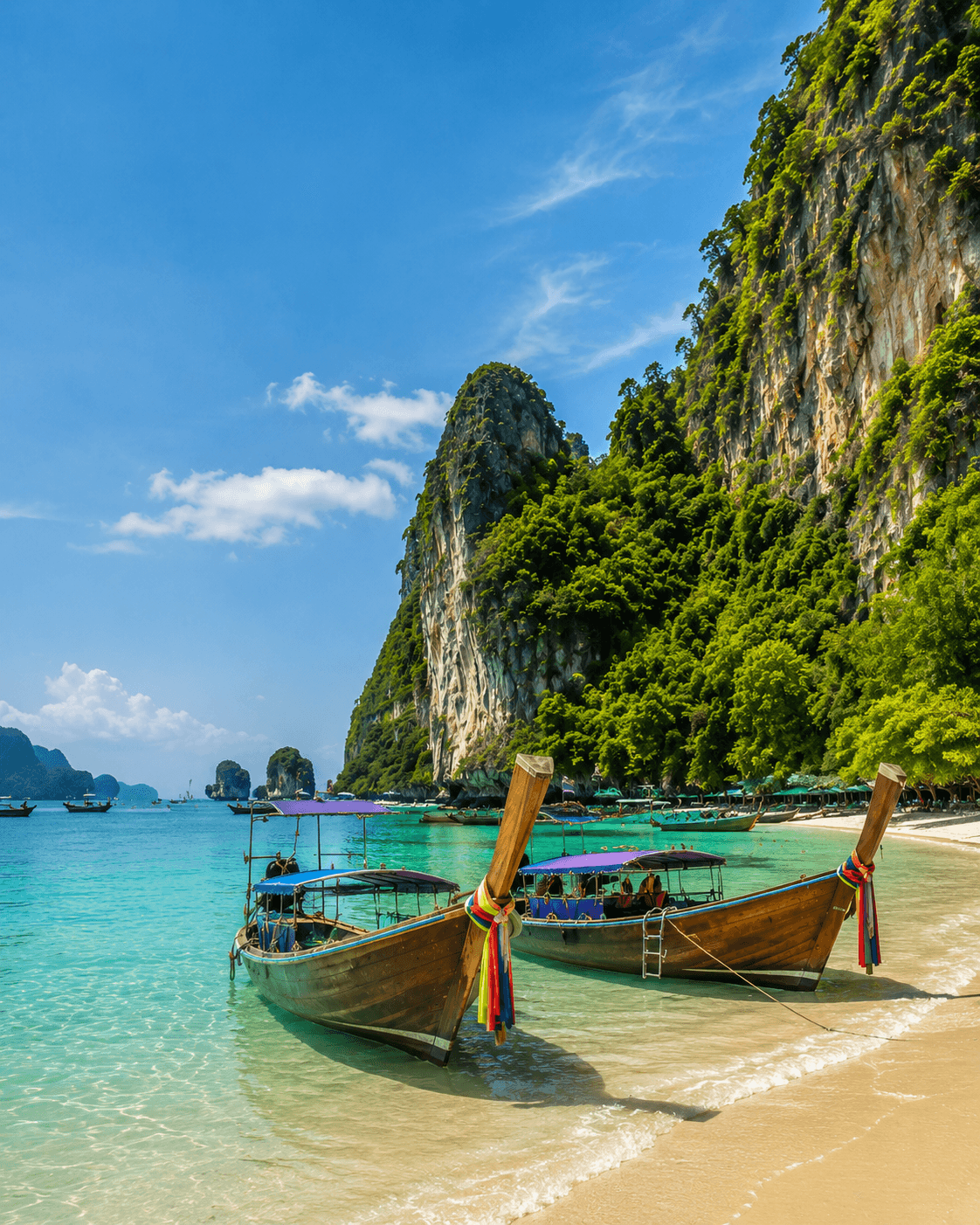
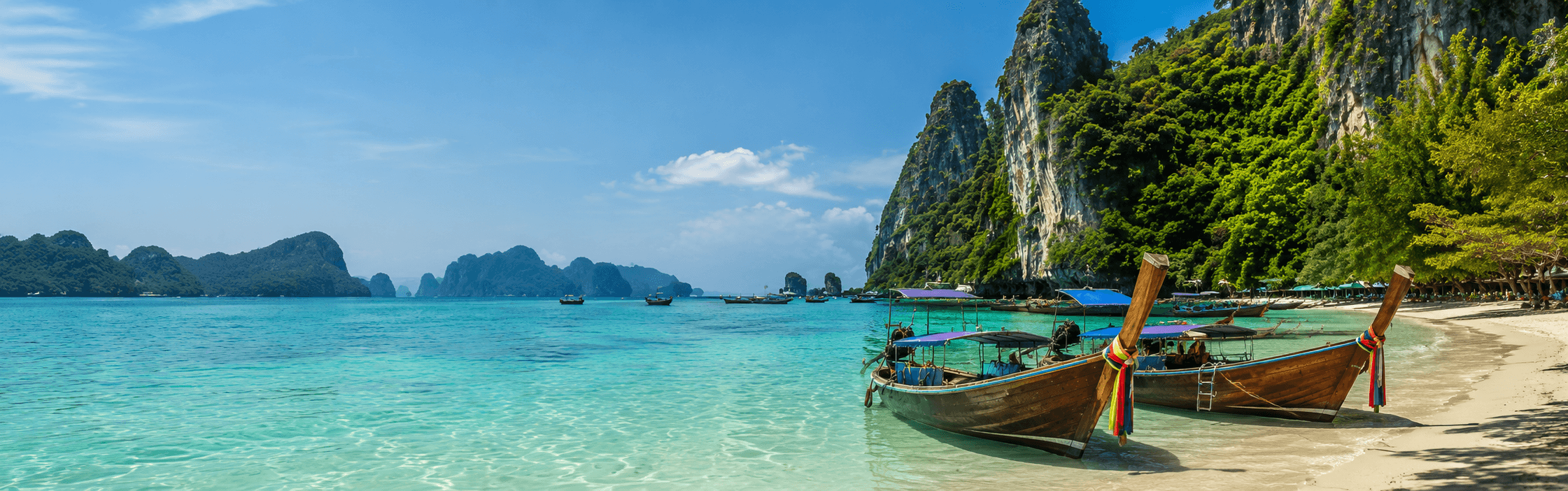
You don't need a certification for the best of Thailand's water. Phang Nga Bay by longtail is the classic: limestone stacks rising out of flat green water, sea caves you paddle into. From Krabi, the four-island trip and the Hong Islands are the standards. Book the earliest departure available, because the difference between 8am and 11am at Maya Bay is two entirely different days.
Should you watch Muay Thai, and where?
Yes, even if you have no interest in combat sports, and possibly especially then. What makes a Bangkok fight night worth the ticket isn't the fighting, it's the room. The betting crowd hand-signals odds across the stadium and roars on a scale unrelated to what just landed. Every fighter performs the wai khru ram muay before the bell, a slow ritual dance that looks like nothing until you understand it's a prayer.
-
Rajadamnern
From ฿1,500
Opened in 1945 as the world's first purpose-built Muay Thai arena, and the only venue in the city with fights every night, which is the answer if your dates are tight. Saturdays bring the Rajadamnern World Series.
-
Lumpinee
From ฿1,000
Military-run, out on Ram Inthra, and carries the belt Thai fighters actually want. Hosts ONE Championship on Fridays.
The most common way visitors overpay is a markup on a ticket with a fixed published price. Book direct through the stadium's own site. Second-class seats at ฿1,000 to ฿1,500 are where the betting crowd sits, which is the better experience anyway: ringside is closer to the canvas and further from the atmosphere.
Want more than a seat? Drop-in classes across Bangkok, Chiang Mai and Phuket take beginners twice daily for a few hundred baht.
Spas, national parks and adventure
Nuad Thai joined UNESCO's Intangible Cultural Heritage list in December 2019. Therapists work on sen, energy lines understood to cross the body, using hands, elbows, knees and feet plus herbal compresses. Wat Pho is its institutional home; the school there has trained over 200,000 therapists working in 145 countries. Traditional Thai massage is genuinely intense, so ask for oil massage if you want relaxation, and don't be shy about saying bao bao, meaning gently.

Khao Sok, inland between Phuket and Koh Samui, is the standout park: rainforest older than the Amazon, limestone cliffs over Cheow Lan Lake, floating bungalows, and an estimated 200 to 300 wild elephants inside its boundaries. Stay the night, because the day trip misses the point. Khao Yai is the easy one, three hours from Bangkok; Doi Inthanon holds Thailand's highest peak; Erawan has a seven-tiered waterfall you climb rather than look at. Railay in Krabi is one of Asia's great sport-climbing spots.
"Sanctuary" is unregulated in Thailand and used by camps with wildly different standards. No riding is the obvious line, but consensus has moved further: scheduled group bathing is now widely considered stressful, forcing a natural behaviour into a performance repeated for strangers all day.
- Riding, in any form
- Scheduled group bathing sessions
- Walking on command or photos on demand
- GFAS accreditation
- Observation-only visits
Nightlife, shopping and cruises
Bangkok's rooftop bars are worth one evening. The city read from forty floors up is a different city from the one at street level, and dress codes are real. Koh Phangan's Full Moon Party is monthly, enormous and honest about what it is; the north of the same island is remarkably quiet.
Chatuchak runs at weekends and is the market to prioritise: thousands of stalls across a grid you will get lost in, which is the point. Go early, bring cash, agree a meeting spot. Chiang Mai's Sunday walking market is the more pleasant browse.
Chao Phraya dinner cruises are the easy Bangkok evening, but the better version costs less. The public express boat runs like a bus for a few baht and gives you the same river with actual Bangkok on it. Take it at sunset and spend the difference on dinner.
The rest of our Thailand guides
- Best places to visit in Thailand Which regions and islands, and when each works
- Thailand itinerary guide 5, 7, 10 and 14-day routes and multi-city pairings
- Thai culture, food and local life Street food, festivals, Buddhism and etiquette
- Thailand travel guide Visas, currency, eSIMs, transport, costs and safety
Frequently asked questions
What is the number one thing to do in Thailand?
For most first-timers, island hopping by longtail through Phang Nga Bay or the Krabi islands. No skills needed, and it delivers the version of Thailand people picture. With three spare days, learning to dive on Koh Tao has a longer half-life.
How much does it cost to learn to dive in Thailand?
On Koh Tao, roughly ฿9,000 for SSI Open Water and ฿11,000 to ฿13,000 for PADI over three to four days, which is around ₹27,000 to ₹39,000, about half what the same course costs in Australia.
Is a Muay Thai fight worth watching in Bangkok?
Yes, and the atmosphere matters more than the sport. Rajadamnern runs fights every night from about ฿1,500; Lumpinee from about ฿1,000. Book direct through the stadium, not a hotel desk or tout.
Are elephant sanctuaries in Thailand ethical?
Some are, many aren't, and the word itself is unregulated. Avoid riding without exception, treat scheduled bathing as a red flag, and look for GFAS accreditation. Observation-only sanctuaries are the current standard.
The experiences are cheap. Fitting them together is the expensive part.
The Similans close half the year. Koh Tao's whale sharks come in spring. Rajadamnern's best card is a Saturday. Miss one and you don't just miss an activity, you rearrange the trip around it.
Artictern lets you drop the experiences you want onto your dates and see which ones conflict, before the booking rather than after.


