Nearly 20,000 Entry Refusals: Why Travellers Are Turned Away at Schengen Borders
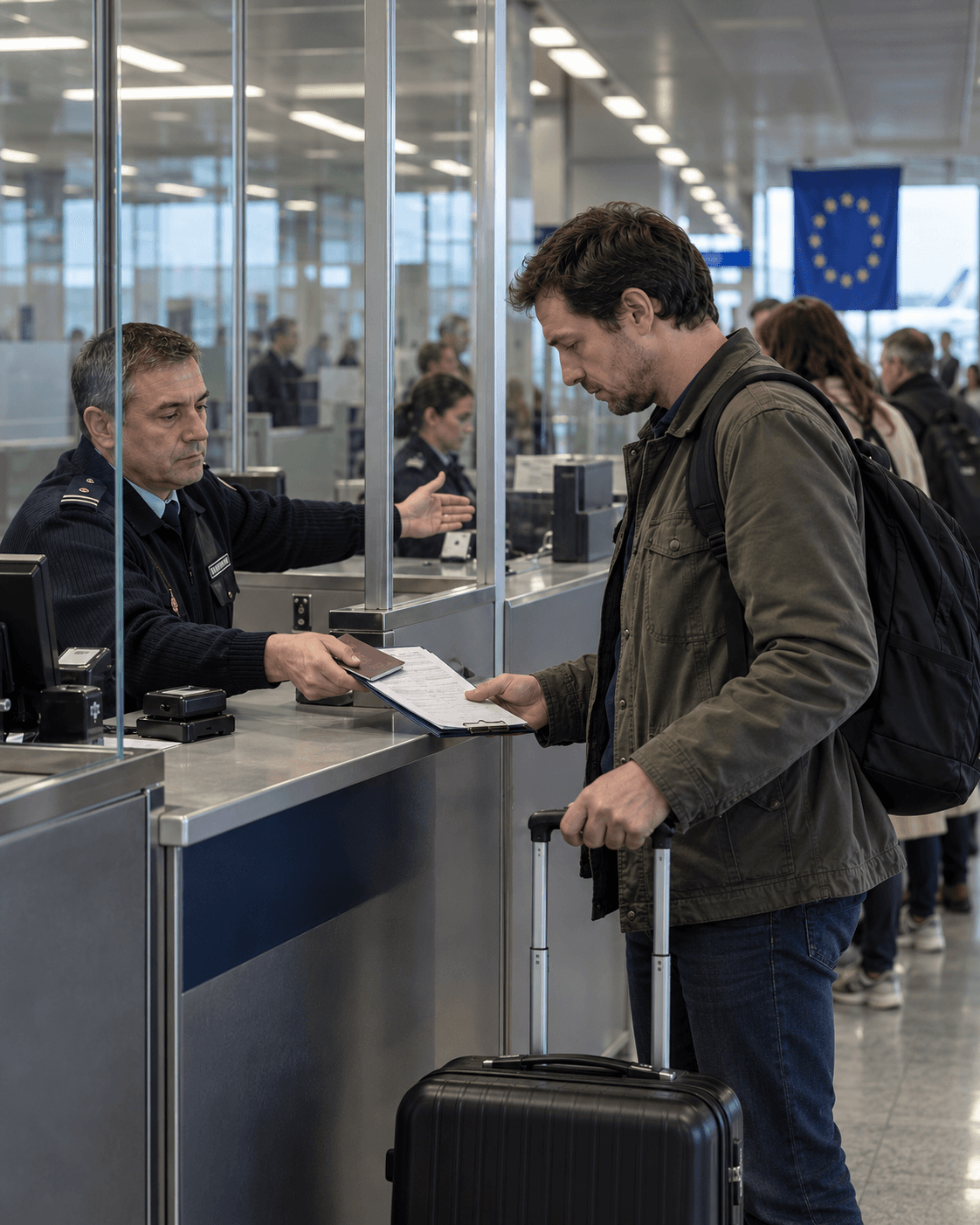
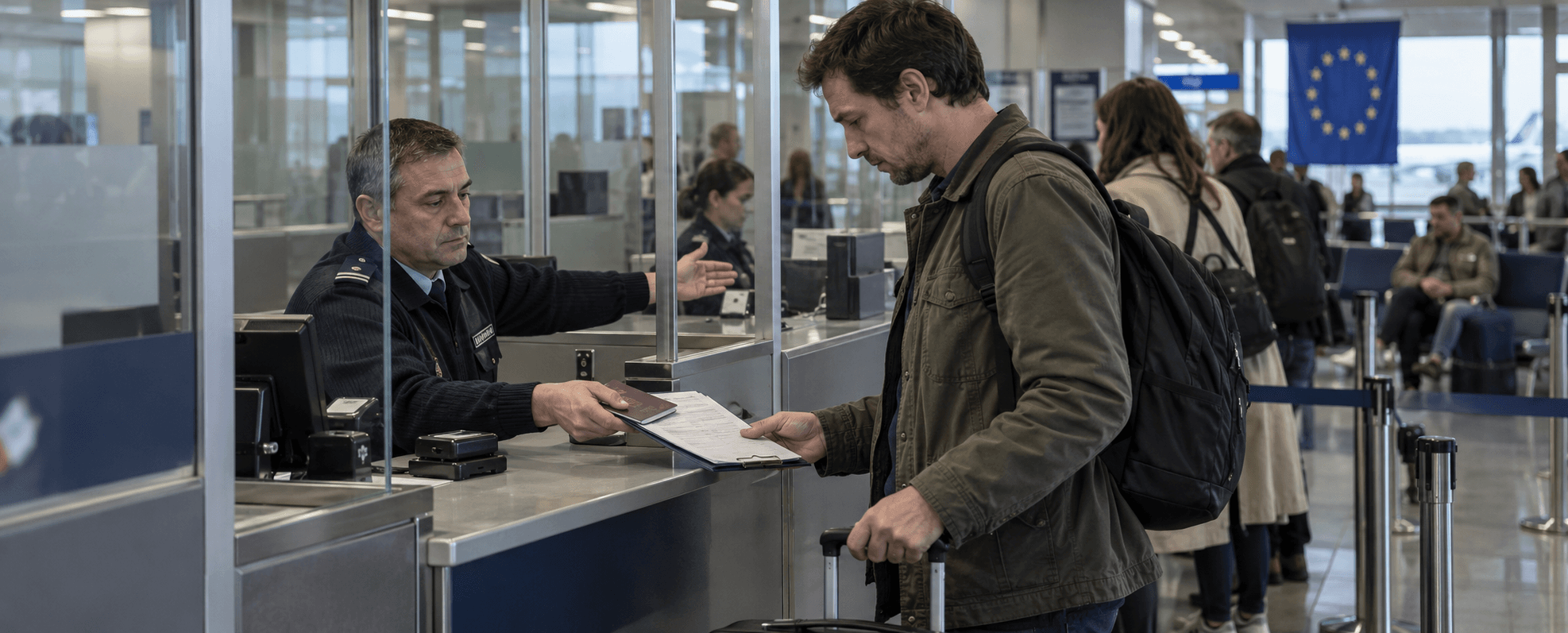
By the time your flight lands, Europe already feels familiar. You have pictured the streets, chosen your first meal and booked the next train. But before any of it begins, there is one more stop: passport control, where even a valid visa does not guarantee entry.
At passport control, that same journey becomes a handful of questions. Where are you staying? How long are you visiting? When are you leaving?
Your answers might be tucked into three booking apps and an email you can never find. Or perhaps you assumed that getting the visa meant this part was settled.
You can land in Europe without being allowed to enter it. A visa and a flight get you to the border; the entry conditions still have to be met there. That distinction sits behind a striking figure: 19,985 entry refusals recorded by the EU’s Entry/Exit System between January and March 2026.
The numbers become more useful when you look at the reasons. The largest category concerned the purpose and conditions of the visit. Others involved time already spent in Schengen, missing documents or insufficient funds. Here is what those findings mean for the trip you are planning.
About the figure: eu-LISA’s Q1 2026 report, published on 10 July, covers 1 January to 31 March. EES was still being introduced, so the data covers participating border crossings, not every Schengen refusal. It is not a tourist-only count or a measure of your personal likelihood of refusal.

What the refusal figures reveal
The full report shows that refusals arise from several different problems. An unclear or unsupported visit is one category. An exhausted stay allowance or an existing entry-refusal alert is another.
| Recorded reason | Recorded cases | What to check before travelling |
|---|---|---|
| Purpose and conditions of stay not justified | 7,202 | Evidence supporting the actual reason and arrangements for your visit. |
| Maximum short-stay allowance already used | 4,353 | Previous Schengen dates and the duration of the new trip. |
| Entry-refusal alert in the Schengen Information System | 2,705 | Any unresolved entry ban or immigration decision. |
| No valid visa or residence permit | 2,657 | The document you need, its validity and whether it allows another entry. |
| Insufficient means of subsistence | 1,401 | The destination’s financial requirements and accepted proof. |
| No valid travel document | 635 | Passport validity, issue date and recognition. |
Source: eu-LISA, EES Quarterly Report Q1 2026, Figure 3. Selected grounds are shown. More than one ground can apply to a refusal, so categories should not be added together as separate travellers.
These figures do not establish which nationalities face the highest refusal rate: that would require comparable arrival totals. Nor does the report identify an airport where a tourist is most likely to be stopped. Its rollout-period limitations include the absence of a breakdown by border crossing point.
Why a valid visa is only part of the picture
A Schengen visa allows you to travel subject to its conditions. Border officers still assess whether you meet the entry requirements. Visa-free travellers also need to meet those requirements.
For ordinary short visits, your passport generally needs to have been issued within the previous 10 years on entry and remain valid for at least three months after your intended departure from Schengen. Officers may also ask for supporting documents, such as accommodation details or a return ticket. Your Europe explains the entry conditions.
Read the visa’s dates, days and entries separately
The validity window tells you when the visa can be used. The permitted duration tells you how many days you can stay. The number of entries tells you how often you can enter. Italy’s Foreign Ministry explains these distinctions.
For example, a visa valid from 1 November to 15 December with a 15-day stay allowance does not authorise a six-week holiday. You must respect both the day allowance and the validity window.
Planning a side trip outside Schengen? Suppose you enter France on a single-entry visa, visit London and then plan to return to Paris. Leaving for the UK uses up that entry; unused holiday days do not turn the visa into permission to enter again. A journey entirely within Schengen is different. Check your entries before buying that extra flight. See the Commission’s explanation of single and multiple entries.
Three different situations: A visa refusal happens during an application. Airline denied boarding happens before your flight. A border entry refusal happens when the authorities decide you cannot enter. The nearly 20,000 figure concerns the last of these.
The documents that help explain your trip
Think of this as keeping the essential parts of your journey in one easy-to-open folder. You should be able to show where you are going, where you will stay and how the visit will be paid for.
The exact evidence depends on your destination and circumstances. Italy’s Foreign Ministry recommends carrying copies of relevant visa-application documents, including invitations and accommodation and flight bookings. If your plans have changed, keep the current arrangements accessible too.
Make the trip easy to understand
As an illustration, imagine arriving for a ten-day visit after changing hotels and moving your return flight. The old bookings describe a different journey. Bring the updated confirmations so you can explain what you are actually doing. This is a practical preparation example, not a claim that changing hotels automatically causes refusal.
| Part of the trip | Useful preparation |
|---|---|
| Your route | A short itinerary with dates, destinations and relevant transport bookings. |
| Your accommodation | Current reservations, or the host documents required by the destination. |
| Your budget | Accepted evidence that you can fund the stay and departure. |
| Your departure | Return or onward arrangements, and permission to enter the next country where required. |
| Your reason for travelling | Relevant invitations, event details or business documents. |
| Your insurance | The policy certificate and assistance details, meeting the requirements that apply to your trip. |
For a concrete example, France’s arrival guidance lists accommodation, sufficient resources, return travel or the means to fund it, and medical insurance among the documents that may be checked. Private-host accommodation can require a town-hall-validated certificate.
There is no single daily budget for every Schengen country
France specifies €65 per day with a hotel booking and €120 per day without one, with separate provisions for private hosting and partial hotel bookings. These are France’s rules, not a Schengen-wide spending requirement. Check your destination’s current figures and accepted proof.
For instance, ten days in France with hotel bookings gives a reference amount of €650 under that €65 daily rule. That is a financial-means calculation, not an instruction to carry €650 in cash; check which evidence France accepts for your circumstances.
Our practical suggestion: save the essentials offline and keep a small printed backup. A booking that exists somewhere in your inbox is much easier to use when you can open it without airport Wi-Fi.

The 90/180-day rule that catches repeat visitors
For ordinary short stays, the general limit is 90 days within any rolling 180-day period across Schengen. Both arrival and departure days count. A visa can authorise a shorter stay.
Changing countries inside Schengen does not start a fresh allowance. Neither does a quick trip outside it. Your earlier days remain part of the calculation until they fall outside the rolling window. Switzerland’s migration authority explains the calculation.
A simple example: Twenty days in France, 15 in Italy and 10 in Spain add up to 45 Schengen days. If those days all remain inside the relevant 180-day window, they count together when you plan your next visit.
Use the European Commission’s short-stay calculator with your actual travel dates. Check your planned departure as well as your arrival. Residence permits, long-stay visas and free-movement rights can change which rules apply.

What EES changes at the border
The Entry/Exit System digitally records eligible non-EU travellers’ short-stay entries, exits and entry refusals. Following its phased introduction, it became fully operational on 10 April 2026, replacing passport stamping for travellers covered by the system. The European Commission explains EES here.
Depending on your circumstances, registration involves a facial image and/or fingerprints. Where collection is legally required, refusing to provide biometric data can result in denied entry. Exemptions apply, including for certain residence-permit and long-stay-visa holders. Check the official biometric guidance and the exemption categories.
EES records the journey; it does not replace the entry conditions. The report’s January–March figures also describe a particular quarter, not a live total for the whole of 2026.
What if the digital record is wrong?
The Royal Netherlands Marechaussee acknowledges possible EES errors, including missing entry or exit records and duplicate files. These can affect automated gates and calculations of the remaining stay.
If your record appears wrong, keep evidence of your actual movements, such as boarding passes and tickets. The Dutch guidance directs travellers to the competent authority of the country through which they last entered or exited, or the intended destination for a first trip, to request access or correction. It also warns that corrections may not be immediate.
That is another reason to retain travel records after you get home, especially if you will be returning soon.
What happens if you are refused entry?
Under the Schengen Borders Code, a refusal must state the precise reasons and be provided on a standard form. You have a right to appeal under the law of the country making the decision, but an appeal does not automatically suspend the refusal. Article 14 sets out these safeguards.
If this happens, focus first on understanding and keeping the decision:
- Read the recorded reason. Ask for clarification if you do not understand it.
- Point out relevant evidence. If you believe a document or fact has been overlooked, explain it clearly.
- Keep copies. Save the refusal form, bookings and correspondence.
- Check the appeal instructions promptly. Seek qualified advice where needed, especially if you believe the decision is wrong.
- Ask about the immediate travel arrangements. Contact your carrier and insurer about the practical next steps and any applicable cover.
Refusal is not automatically the same thing as a permanent ban. Your next steps depend on the grounds and any separate immigration decision. Understand those before booking another attempt.

A simple check before you fly
Before the packing starts, set aside a few minutes for the less exciting parts of the trip:
- Check your passport’s issue and expiry dates.
- Read your visa’s conditions, if you need one.
- Calculate previous Schengen stays against the new dates.
- Check the destination’s official arrival requirements.
- Replace cancelled or outdated documents with your current arrangements.
- Save essential records offline and keep them in your hand luggage.
You do not need a speech ready for passport control. Our advice is simpler: know your own plan, answer honestly and have the relevant evidence within reach.
Frequently asked questions
Can I be refused entry with a valid Schengen visa?
Yes. A valid visa does not remove the requirement to satisfy the other entry conditions at the border.
Do visa-free travellers need supporting documents?
They can be asked for them too. Visa exemption does not exempt a traveller from the applicable border checks.
Do I need to carry my entire budget in cash?
Check the destination’s accepted evidence of financial means. Do not assume that its daily reference amount must all be carried as banknotes.
Must I enter through the country that issued my visa?
Not necessarily. Germany’s Foreign Office explains that the main destination determines where to apply; entry and departure can take place through another Schengen country. Your visa’s territorial validity and the actual journey still matter. Read the official explanation.
Does a hotel booking guarantee entry?
No. Accommodation is one part of the assessment. Your documents, permitted stay and other applicable conditions still matter.
Does this report show that tourists are increasingly being rejected?
No. The headline figure alone cannot establish that. Its limited rollout coverage and lack of a tourist-only refusal rate make that conclusion unsupported.
Have the practical answers ready. Keep the rest for the trip.
You can leave the afternoon unplanned. Choose a restaurant when you get hungry. Take the longer walk because the street looks interesting.
Just keep the essentials of the visit clear and within reach: your documents, your stay allowance, your accommodation and your departure arrangements. Then the Europe you have been imagining can finally become the one you get to explore.
Checked against official guidance on 2 November 2026. This guide focuses on ordinary non-EU short-stay visitors; requirements can differ by nationality, residence status and travel rights.


