
Pattaya’s Tomorrowland Debut: What’s at Stake Beyond the Music?
Fifty thousand people a day. Three days of music. A much longer test for Pattaya.
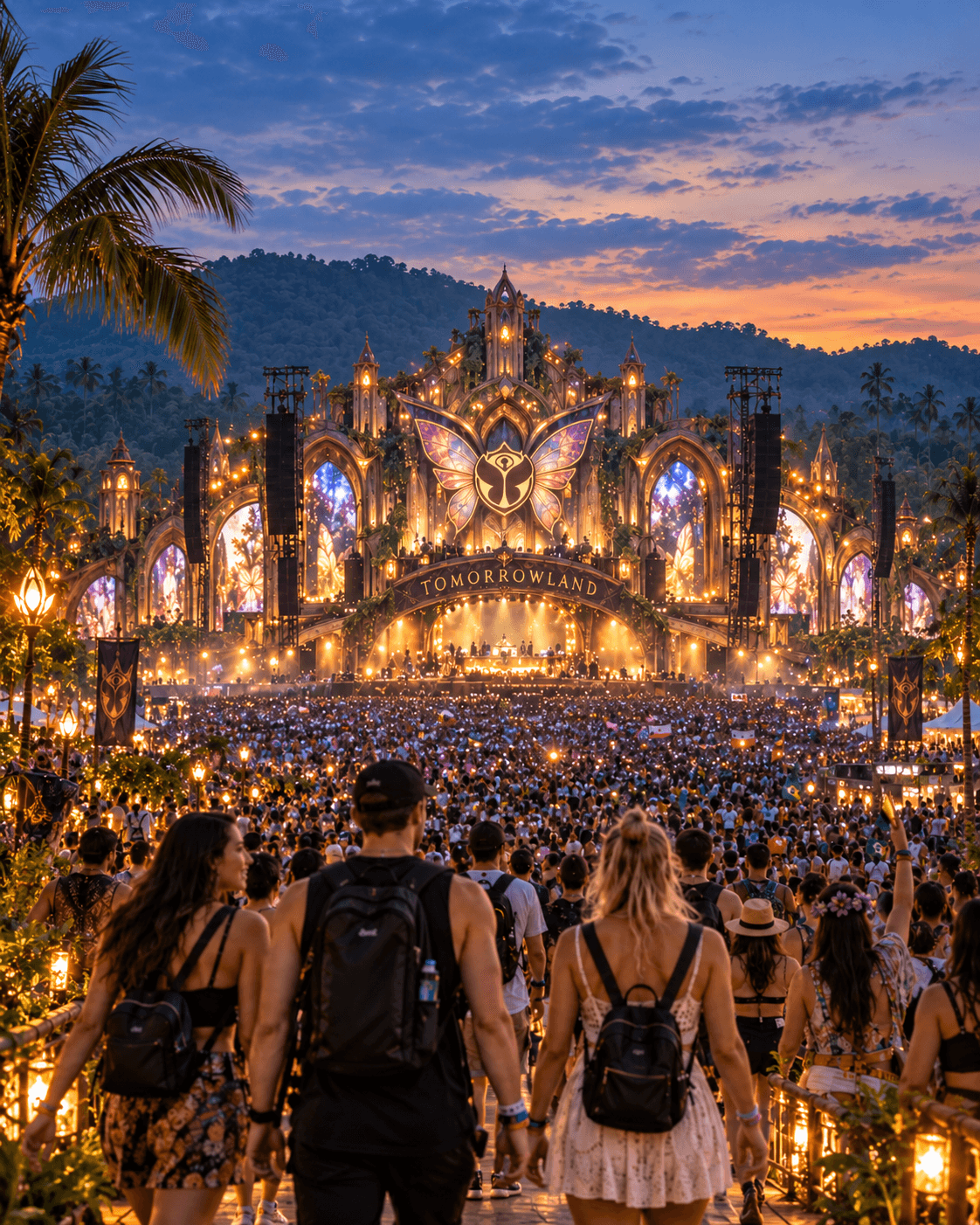
Tomorrowland Thailand arrives near Pattaya on 11–13 December 2026. The stages will attract attention, but the experience around them could matter just as much: hotel check-ins, journeys to the venue, meals outside the festival and the ride home.
For Pattaya, hosting Asia’s first full-scale Tomorrowland is an opportunity to reach new travellers. The question is whether that attention can benefit the destination beyond one weekend.
In short: Tomorrowland Thailand will take place at Wisdom Valley, with approximately 50,000 attendees expected per day. Hotels, transport providers and local businesses could benefit. The debut will also test how well the destination handles concentrated visitor demand.
When and where is Tomorrowland Thailand 2026 happening?
The festival runs from Friday 11 to Sunday 13 December 2026 at Wisdom Valley in Khao Mai Kaew, Bang Lamung district, Chonburi, in the Pattaya area. The Tourism Authority of Thailand confirms this as Tomorrowland’s first full-scale Asian festival.
The theme is Consciencia. Tomorrowland’s lineup announcement lists more than 100 artists across seven stages, including Martin Garrix, Swedish House Mafia, Afrojack, Alan Walker and Steve Aoki.
Tomorrowland confirms that festival tickets and official hotel and Discover Thailand packages are sold out. There will be no DreamVille camping at the Thailand edition, so accommodation is outside the festival grounds.

Why did Tomorrowland choose Pattaya?
The choice was about more than Pattaya’s reputation as a holiday destination. A festival of this size needs space, accommodation and the systems to move people and equipment.
In an interview reported by The Nation, WEAREONE.world CEO Bruno Vanwelsenaers highlighted Thailand’s tourism services, transport infrastructure and hospitality. He also pointed to Wisdom Valley’s safety provisions, infrastructure and available space.
Government support helped with practical requirements such as work permits for visiting artists and staff, and procedures for importing event equipment. The location decision combined a suitable venue with an established tourism destination.
Pattaya also gives visitors a reason to stay longer. It is a coastal city roughly 150 kilometres southeast of Bangkok, with beaches and nearby Koh Larn for island day trips, according to the Tourism Authority of Thailand.

How many visitors are expected, and what does that mean for Pattaya?
Official plans put attendance at approximately 50,000 people per day. A Thai government announcement also projects that more than 60% will come from overseas.
That does not automatically mean 150,000 different visitors over three days. Someone with a three-day pass can be counted on each day they attend.
The challenge is concentrated demand. Visitors need rooms, meals and transport within the same short period, with many travelling towards the venue at similar times. Where they stay and how they get around will matter as much as the headline attendance figure.
Who could benefit? Hotels, restaurants and local businesses
Accommodation providers have an immediate opportunity because festivalgoers will stay outside the grounds. Restaurants, drivers, shops, attractions and event suppliers could also gain business.
In its February 2026 announcement, TAT projected at least THB1.426 billion in direct visitor expenditure and approximately THB5.3 billion in overall economic impact. These are forecasts, not recorded results, and the two measures should not be added together.
The bigger question is how widely spending spreads. Visitors who eat locally, explore nearby attractions and extend their stays can create opportunities beyond their accommodation package.
A strong debut would give smaller businesses a share of the activity, as well as filling hotel rooms. That will be easier to assess after the event, when actual spending and business participation can be measured.
Can Pattaya’s transport and infrastructure cope?
A well-equipped venue is only part of the task. Visitors also need clear routes, organised pickups and a reliable way home.
Official hotel packages included dedicated shuttle transfers between participating hotels and the festival. Independent travellers should confirm their own arrangements rather than assume the same transfers are included.
The key test will be how arrivals and departures are managed. Guests may reach the grounds over several hours, while a closing performance can bring large numbers towards the exits together.
Clear pickup locations, queue management, emergency access and timely visitor information will all matter. The debut will show how well those arrangements work in practice.
What should travellers know, even if they’re not attending?
If a Pattaya holiday overlaps 11–13 December, compare accommodation availability and prices for those dates. Festival demand may affect some properties and routes, but it does not mean every hotel will be full or every part of the city will be equally busy.
For festivalgoers, plan the journey to Wisdom Valley separately from the journey to Pattaya. Check your hotel’s location, transport inclusions and return pickup arrangements before departure.
- Confirm festival access: a room booking alone does not include admission unless the package explicitly says so.
- Check transfers: use the latest instructions from the organiser and your accommodation provider.
- Leave time for onward travel: avoid a tight connection immediately after the festival.
For non-attendees, the useful question is whether the dates and arrangements suit the holiday you want. Check before changing your plans, rather than assuming the entire destination will be disrupted.

Can Tomorrowland change Pattaya’s tourism image?
Tomorrowland could introduce Pattaya to travellers whose first interest is music. TAT links the festival with its ambition to attract a new generation of international visitors and strengthen Thailand’s position as an event destination.
That creates an introduction, but a lasting change depends on the whole trip. The welcome, accommodation, food, transport and places visitors explore will shape their impression alongside the performances.
The result will become clearer through visitor feedback and return trips. A festival can make people notice Pattaya; the destination has to give them reasons to come back.
What would long-term success look like beyond the debut?
Success should be measured beyond ticket sales. Did visitors enjoy the wider destination? Did spending reach local businesses? Were transport arrangements effective, and were residents’ everyday journeys considered?
The project also includes a Tomorrowland Academy programme intended to transfer event-management and festival-operation skills to Thai personnel. Training and local supplier participation could leave benefits beyond the performances.
December will provide the first real evidence. The lasting opportunity is to turn a successful festival visit into a reason to return to Pattaya.


