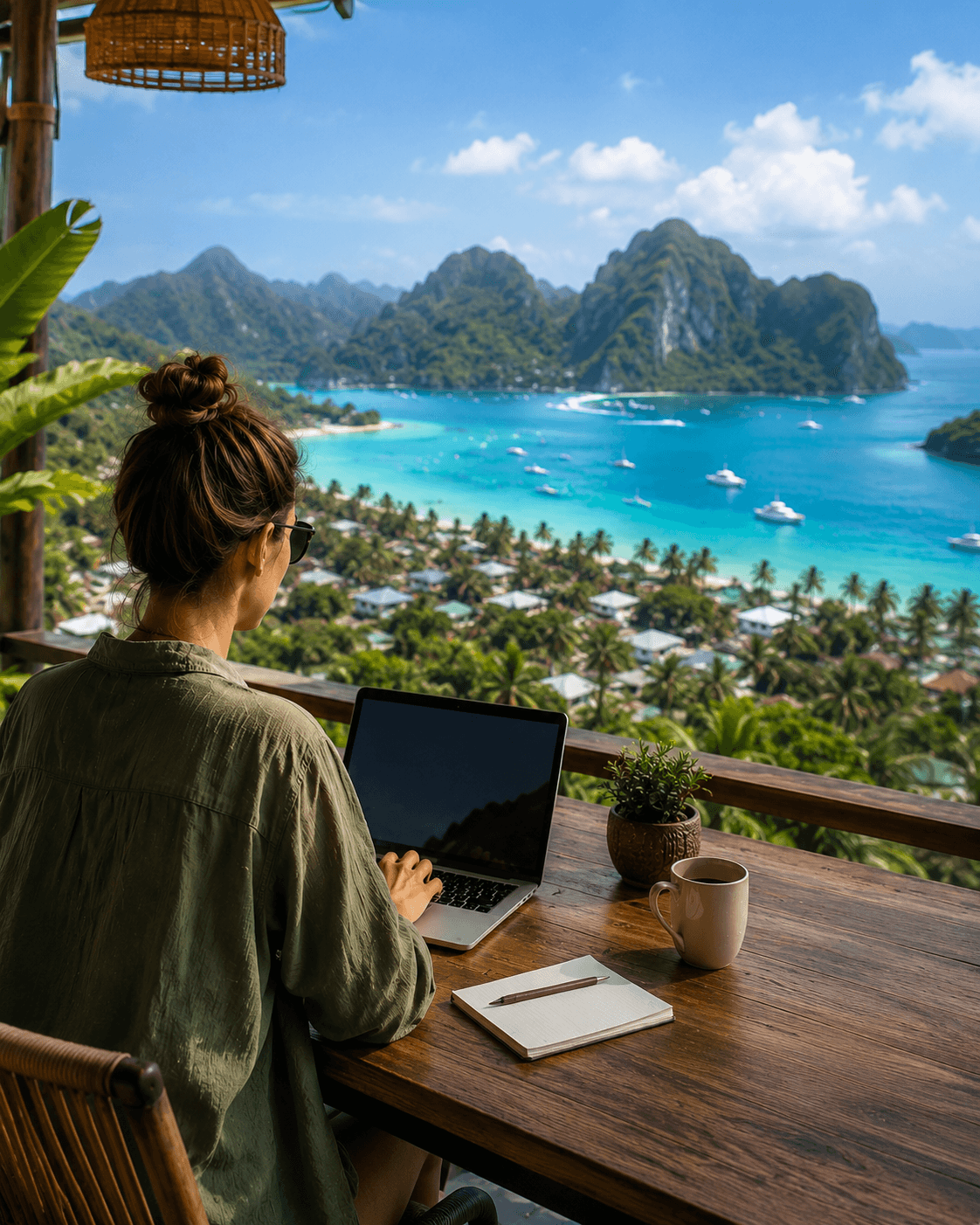
10 Countries Making It Easier for Digital Nomads to Live and Work in 2026
Entrepreneur and author Tim Ferriss popularized the idea that remote work should be about designing a life you enjoy living—not simply escaping the traditional 9-to-5.
That idea only holds up if the life underneath it is actually legal and stable — not a string of tourist stamps and border runs held together by hope. For years, that was the default: enter on a tourist visa, work quietly, hope nobody asks questions. That loophole is closing fast. Rather than pushing remote workers out, more than 50 countries have now built an actual front door — a real visa, clear tax rules, and in a few cases, a genuine path to residency. Here are 10 doing it especially well in 2026, with every figure below checked against current sources.
| Country | Visa | Standout Feature |
|---|---|---|
| Portugal | D8 Visa | Path to EU residency |
| Spain | Digital Nomad Visa | 24% flat tax option |
| Croatia | Digital Nomad Permit | No local tax on foreign income |
| Greece | Digital Nomad Visa | 50% income tax cut, 7 years |
| Estonia | DNV (Type D) | World's first dedicated DNV |
| Georgia | Visa-free stay | 365 days, territorial tax |
| Colombia | Digital Nomad Visa | ~$1,400/mo threshold |
| Brazil | Digital Nomad Visa | $1,500/mo or $18k savings |
| Thailand | DTV | 5-year multi-entry visa |
| Indonesia (Bali) | E33G Visa | 1-year renewable KITAS |
Portugal — The Benchmark

Portugal's D8 Visa is still the reference point most other programs get compared to. As of 2026, the income requirement is €3,680/month — set at four times Portugal's minimum wage, which rose to €920 this year. The visa grants one year of residency, renewable, with a path to permanent residency and EU citizenship after five years.
Spain — Tax Perks Included
Spain's Digital Nomad Visa requires €2,849/month for a single applicant — 200% of Spain's minimum wage — and can run for up to five years. Visa holders can also opt into the "Beckham Law" regime: a flat 24% tax rate on income up to €600,000, instead of Spain's standard progressive rates that climb as high as 47%.
Croatia — Zero Local Tax

Croatia's Digital Nomad Permit exempts foreign-sourced income from Croatian income tax entirely, even past the usual 183-day residency trigger. The 2026 income threshold sits around €3,295–3,622/month depending on when it was last indexed. One catch: the permit runs up to 18 months and cannot be renewed consecutively — holders must leave Croatia for six months before reapplying.
Greece — Sun and a Tax Break
Greece requires about €3,500/month and offers a 50% income tax reduction for up to seven years once you become a tax resident and commit to staying at least two years. A 2026 procedural change is worth flagging: under Law 5275/2026, effective February 2026, in-country applications were scrapped — you must now apply through a Greek consulate before traveling.
Estonia — The Original

Estonia launched the world's first dedicated digital nomad visa back in 2020, and it remains a one-year, non-consecutively-renewable option in one of Europe's most digitized countries. Current sources report the income threshold inconsistently, ranging from roughly €3,500 to €4,500/month — a gap likely tied to different update dates, so it's worth confirming directly before applying.
Georgia — Low Friction, With a New Wrinkle
Citizens of roughly 90–95 countries can enter Georgia visa-free and stay for up to 365 days, with foreign-sourced income untaxed under Georgia's territorial tax system. However, a 2026 amendment now requires foreign nationals to hold a work permit starting March 1, 2026, meaning visa-free entry alone no longer automatically covers remote work — a meaningful change from Georgia's earlier reputation as an entirely no-strings-attached option.
Colombia — Budget-Friendly, Not Rock-Bottom

Colombia's digital nomad visa requires roughly $1,400/month in income — three times Colombia's 2026 minimum wage, which increased significantly this year. That's higher than the $750/month figure still circulating in some older guides, but it remains one of the more accessible thresholds in the Americas, especially paired with a low cost of living in cities like Medellín.
Brazil — Room to Grow
Brazil's digital nomad visa asks for $1,500/month in income, or alternatively $18,000 in savings. It's a straightforward option for remote workers who want variety — from São Paulo's city life to smaller coastal towns — without Europe's paperwork or price tag, and a 90-day grace period now lets tourists switch to nomad status without leaving the country first.
Thailand — Five Years, Multiple Entries

Thailand's Destination Thailand Visa (DTV), launched in July 2024, is a five-year, multiple-entry visa allowing stays of up to 180 days per entry, extendable to 360 days before a trip abroad is required. It asks for about 500,000 baht (roughly $14,500) in savings rather than a monthly income figure, and — as with most programs here — income must come from outside the country.
Indonesia (Bali) — Built for Remote Work
Indonesia's E33G Remote Worker Visa, introduced in 2024, gave Bali-based nomads a legal, purpose-built option in place of the old gray-area tourist visas. It ties to a renewable one-year residence permit (KITAS) and generally expects proof of income around $60,000 a year, aimed at established remote professionals rather than first-time freelancers.
A Life You Don't Need a Vacation From
None of these countries hand out free passes — every one still wants proof of income, insurance, and a clean record, and a few now ask for more paperwork than they did a year ago. But that's arguably the point. A visa isn't just a formality; it's what turns a location-independent lifestyle from something fragile and temporary into something someone can actually build a life around, without watching the calendar for the next border run. That's closer to what Ferriss was really describing — not an escape, but a life that doesn't need one.
Disclaimer: Visa requirements, income thresholds, tax rules, and residency policies change regularly. Always verify the latest information with the relevant embassy, immigration authority, or official government website before applying.


